The Materials of Place

I don’t think of materials as neutral.

The wool, plants, paper, branches and found objects that enter my studio carry something of where they have come from. A season. A landscape. A history. Sometimes even a relationship.

Working as a fibre artist on Gundungurra Country in the Southern Highlands of New South Wales has made me increasingly interested in what happens when we stop treating materials simply as things to make with, and begin paying attention to what they might have to say.
Alison Kennon working with natural fibre in her Southern Highlands studio

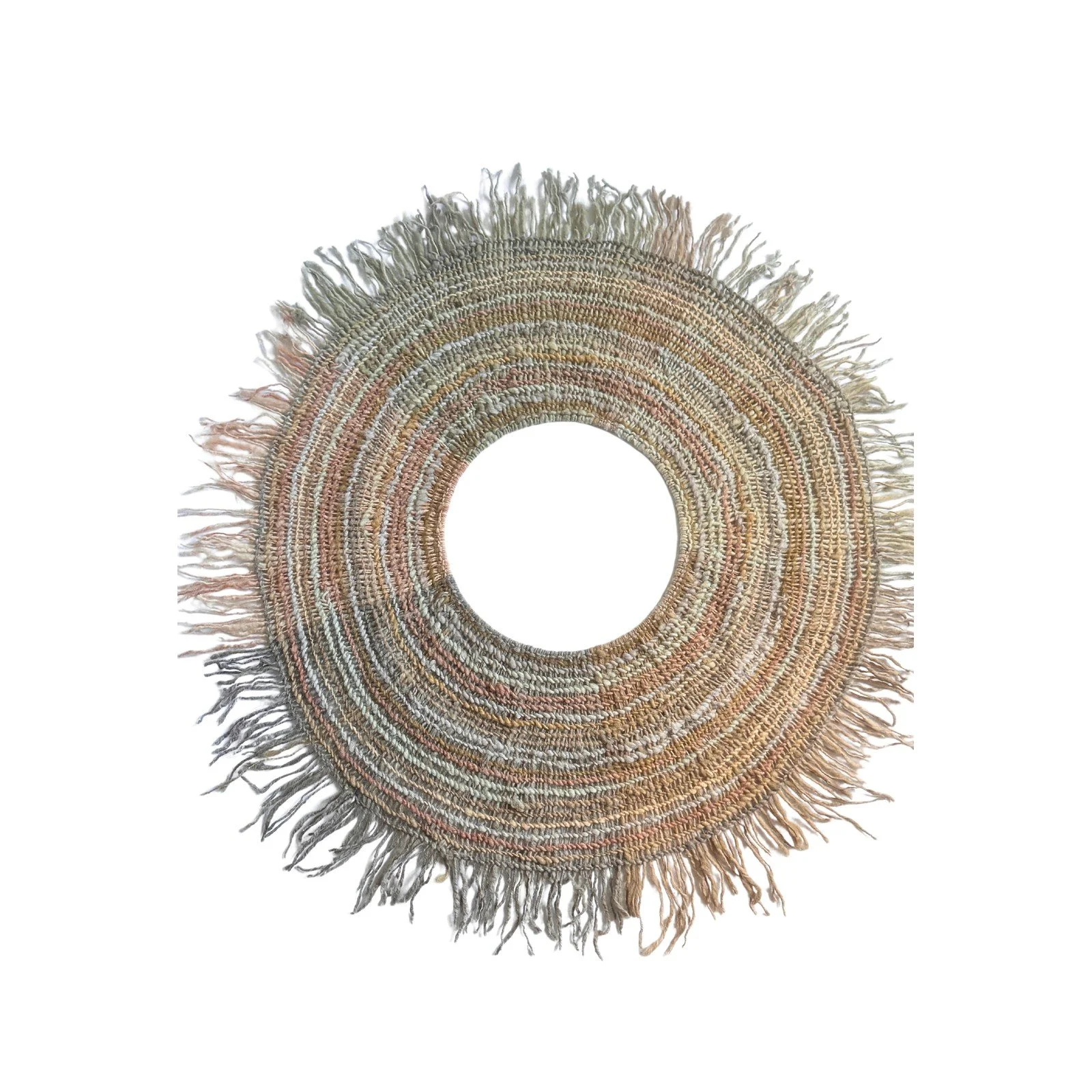
Hand spun, hand woven and hand dyed Altar mat. Wool and plant dyes.

Much of my work begins this way. Not with a finished idea, but with a material.

Wool from my own sheep. A plant gathered for dye. Paper worked slowly by hand. Something collected, noticed or carried home from a walk.

I am interested in what happens when I stay with a material long enough to understand something of its nature, rather than immediately trying to impose an idea upon it. How does it want to bend, hold, resist, soften or change? What happens when the making becomes a conversation rather than an act of control?

The material becomes part of the conversation.

There is an intimacy in knowing where a material has come from.

Some of the wool I work with comes from my own sheep. I wash it by hand, spin it, gather plants for colour, dye the fibre and eventually weave it. By the time it becomes a finished work, the material has passed through my hands again and again.

That slowness matters to me.

In a world where almost everything can be made faster, ordered instantly or reproduced endlessly, working this way asks something different of me. Attention. Patience. Relationship.

The value of the finished object is not only in what it looks like. It also carries the time, place and processes that brought it into being.

Making becomes a way of paying attention.

And perhaps, in paying closer attention to the materials in our hands, we begin to remember that we are not separate from the living world they came from.

Next
Next

Grief and beauty are not opposites.